
From New Year Goals to a Marketing Roadmap for 2026
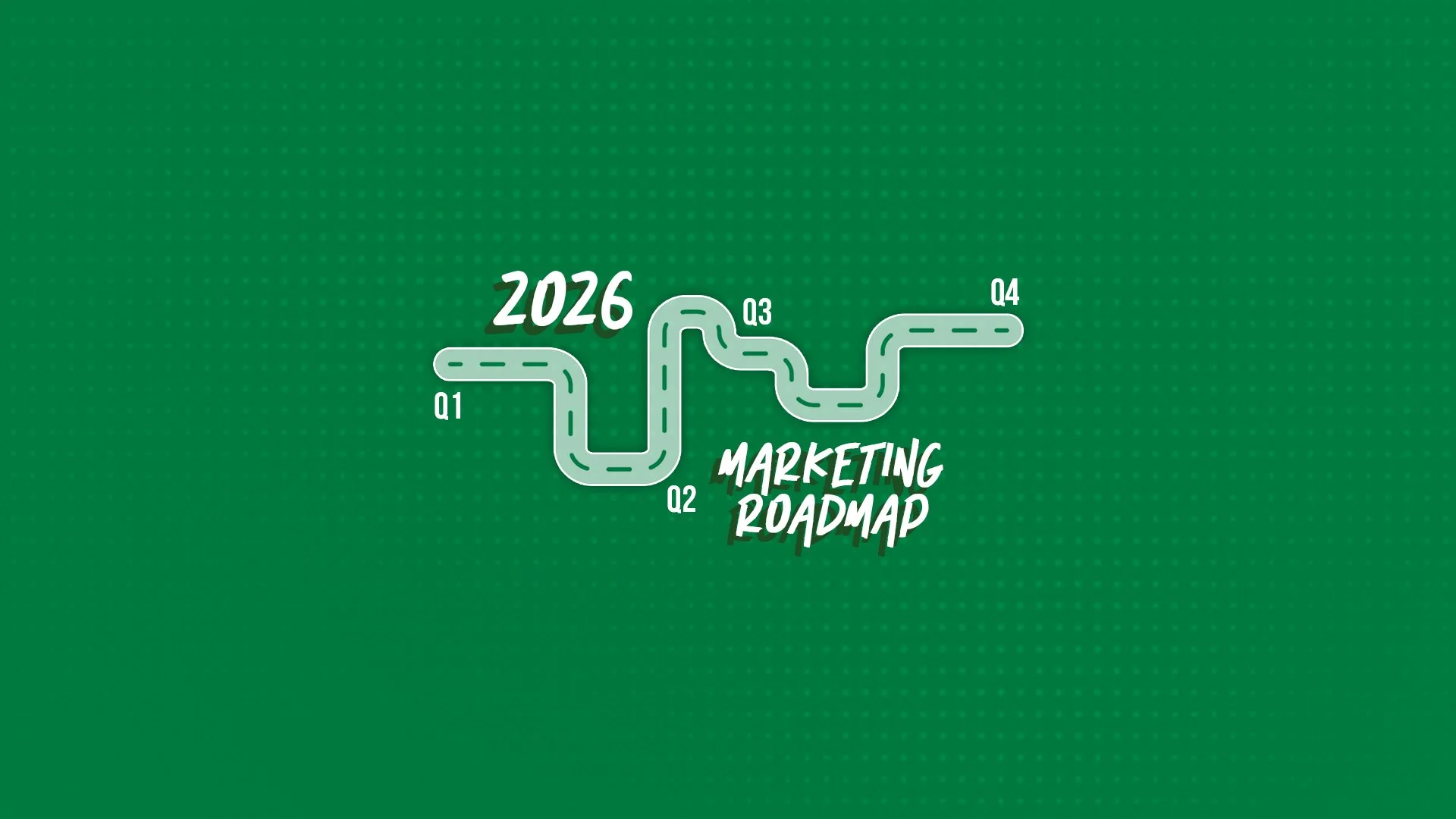
Every January, businesses are revved up to tackle ambitious goals. Motivation is high, between growth targets and new ideas, the fire is lit and teams are energized! By February, many of those goals begin to fade, not because they were unrealistic, but because they were never supported with a clear plan.
This post explains how to channel your team’s New Year motivation into a clear marketing roadmap so your 2026 goals are executed, not forgotten.
January Sets the Tone for the Entire Year
January is an important month! More than the first month on the calendar, it is when decisions are made that quietly influence the rest of the year. Teams are energized. Leaders are thinking forward. There’s openness to doing things better than before. This makes January the ideal time to align on direction before daily operations take over.
When businesses skip planning in January, they often spend the rest of the year reacting. A strong start creates momentum, clarity, and confidence that carries well beyond Q1.
Goals Without a Roadmap Don’t Survive February
Setting goals is easy, but executing them is the opportunity for a challenge. First, every plan needs a roadmap. Without it, even the best intentions lose traction once priorities compete for attention. Teams begin asking, “What should we work on next?” A sign that the roadmap was never clearly defined.
A marketing roadmap provides focus. It outlines what matters most, when it matters, and who is responsible. With a roadmap in place, teams move from guessing to executing.
BLOG POST: See Through the Complexity of Marketing Campaigns
Start With Your Existing Focus and New Launches
Before thinking about posts, ads, or campaigns, it’s important to step back and define what your business is focused on today, and how that focus will evolve throughout the year. Not every marketing plan needs a brand-new launch to be effective. Often, the strongest results come from doubling down on existing products, services, or core offerings and presenting them with greater clarity and consistency. Identify the items which have overstayed their welcome on the shelf and need to move. Determine which services gained momentum last year and could use more support in communicating their value in order to increase awareness.
From there, layer in the new launches, promotions, expansions, or internal initiatives planned for 2026. When you’re clear on both your current priorities and what’s coming next (who it’s for and why it matters), your marketing shifts from reactive posting to intentional execution with a clear purpose.
Use a Product Launch Checklist to Eliminate Guesswork
A product launch checklist removes uncertainty from the process. Instead of scrambling at the last minute, teams can work through a defined sequence that ensures nothing is overlooked.
Checklists help align leadership, marketing, and sales early. They also create repeatable systems, so each launch builds on the success of the last rather than starting from scratch every time.
Product Marketing
Checklist
A practical framework for planning, aligning, and launching your next product with confidence.
Download the ChecklistInside the Guide
The checklist covers:
- Team & Roles
- Timeline
- Sales + Marketing Alignment
- Signage & Visual Branding
- Digital Content & Media
- Printed & Physical Materials
- Follow-Up & Post Launch
Refresh Your Brand With a Clear Company Video
January is the perfect time to update how your business presents itself. A fresh company video helps clarify your message, your value, and your positioning, both internally and externally.
One well-produced video can power your website, social media, email campaigns, and sales conversations throughout the year. It creates consistency, builds trust, and ensures your brand is being represented clearly across every channel.
Plan Your Content Before You Start Posting
Posting without a plan often leads to inconsistent messaging and uneven results. Teams feel pressure to “stay active,” but activity without purpose rarely drives growth.
Planning content in advance allows your marketing to support real business goals. It also reduces stress, improves quality, and helps teams stay focused on what actually matters.
Build a 2026 Content Calendar
A content calendar gives structure to your year. By mapping out holidays, campaigns, launches, and key moments in advance, your team gains visibility into what’s coming and why it matters.
This approach creates balance between promotional content and other value-driven content, and helps maintain consistency while reducing burnout. Part of the goal is to stop asking yourself “what to post?” because you’ll know exactly what needs to be communicated and when.
Execution Is Where Most Businesses Get Stuck
Most businesses know what they should be doing. Where they struggle is follow-through. Execution requires time, expertise, and coordination, especially when teams are already stretched thin.
Without proper execution, even the most thoughout marketing strategies go nowhere. A roadmap only matters if it’s actually implemented, supported by steady follow-through, and clearly defined with team roles and responsibility. Direction is important, but progress only happens when plans turn into action and action becomes consistent.
Turn 2026 Goals Into Action With the Right Support
Having the right support in place can be the difference between progress and stagnation. An outside perspective, such as a marketing agency guiding your team, brings clarity, accountability, and experience, helping teams move faster, work more efficiently, and avoid costly mistakes.
Start the Year With Intent, Not Guesswork
January offers a rare reset. It’s a chance to pause, reflect, and choose intention over reaction. When marketing is planned with purpose from the start, the entire year benefits. If you’re ready to move beyond goals and build a roadmap that actually gets executed, BASE-MINT helps businesses turn ideas into action. Strategically, creatively, and consistently. Let’s talk about building your 2026 roadmap.